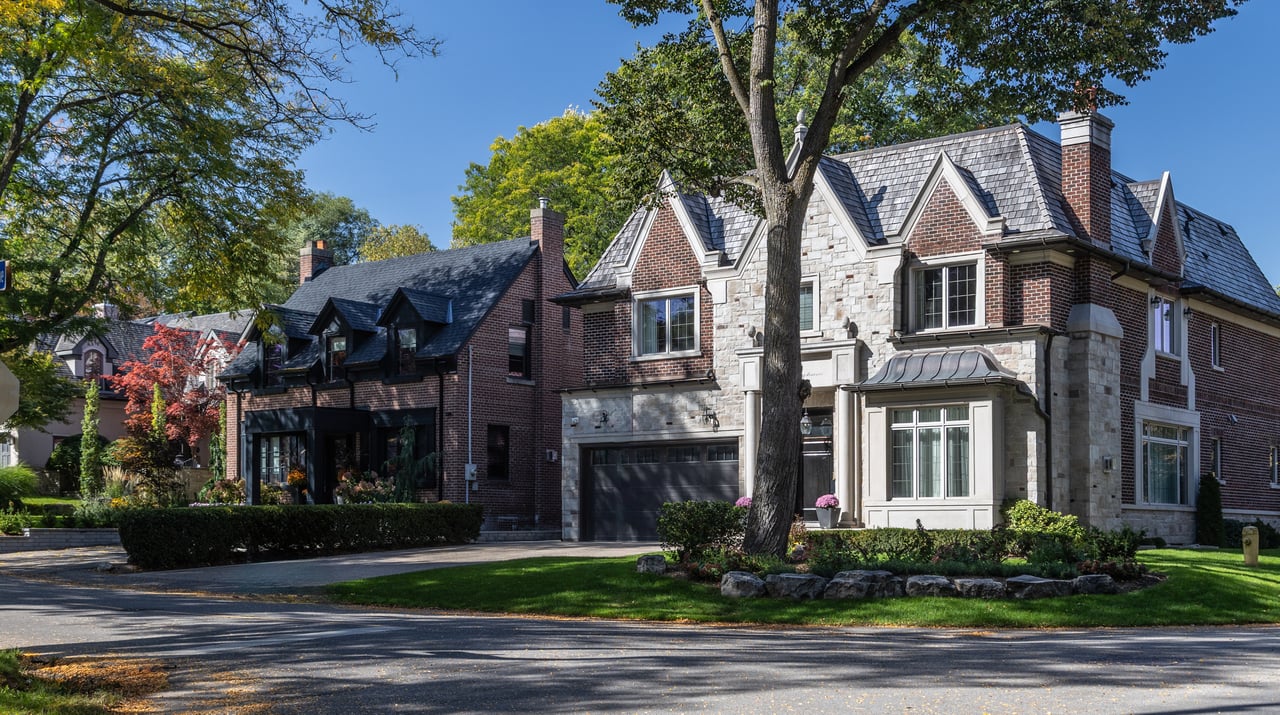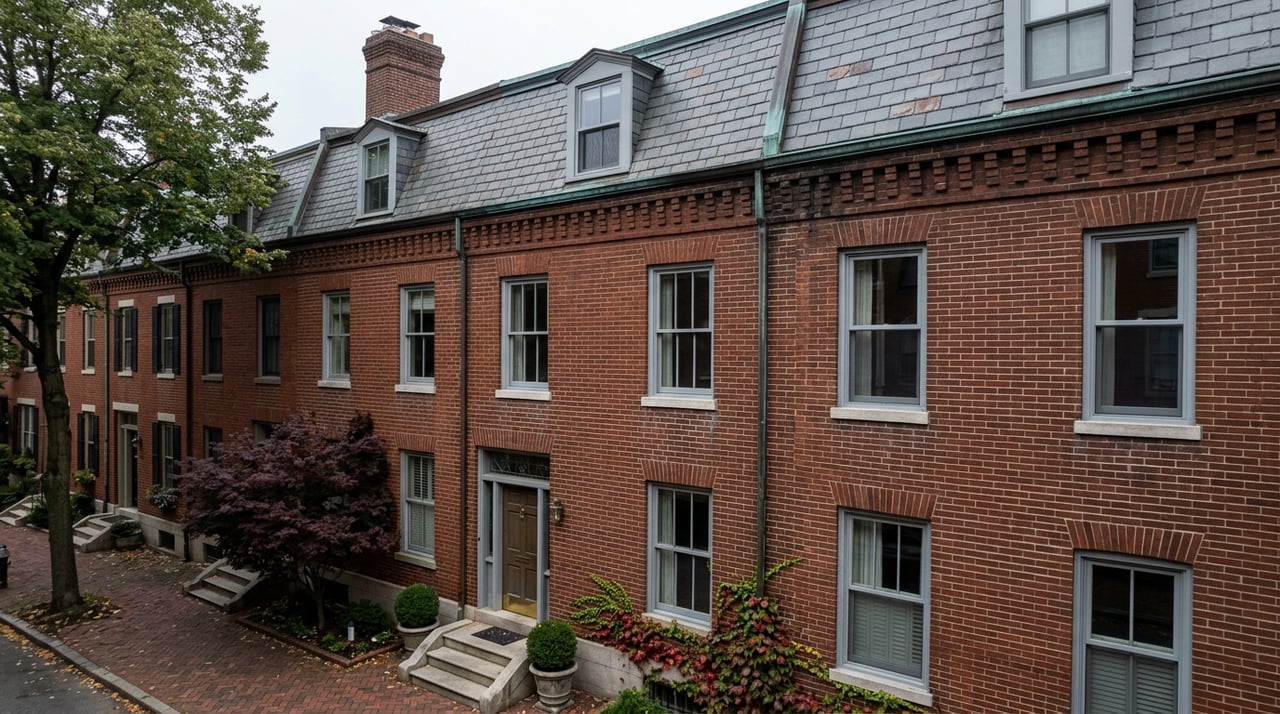
If you pulled Yorkville's luxury sales data this spring and saw zero houses over three million dollars change hands for five months running, what would you conclude? Most people would assume the market for Yorkville houses had stalled. The truth is closer to the opposite, and understanding why matters if you're the one deciding whether to list a Hazelton Avenue property or wait another season.
Five Months, Zero Sales
Between January and May 2026, monthly luxury transaction tracking for the Yorkville corridor recorded zero sales of ground-related properties priced above three million dollars. Not one house, townhouse, or semi-detached closed above that threshold for five straight months.
That streak followed an unusually active stretch the previous fall. October 2025 saw six freehold transactions close in the segment, averaging $4.82 million, with prices ranging from $3.315 million to $8 million. The top sale that month was on Hazelton Avenue at $8 million, the highest freehold transaction the neighborhood had seen since August. September 2025 had produced exactly one freehold sale. August 2025 had produced zero.
Laid out month to month, the pattern looks less like a market and more like a light switching on and off:
| Period | Freehold ($3M+) sales | Notable detail |
|---|---|---|
| August 2025 | 0 | No ground-related closings |
| September 2025 | 1 | Described as a "single freehold transaction" |
| October 2025 | 6 | $4.82M average, $8M Hazelton Ave sale |
| January–May 2026 | 0 (five consecutive months) | Longest recorded freeze of the period |
A five-month freeze followed by a six-sale month, followed by another freeze. That is not a market losing value. It is what a very small sample looks like when you graph it.
What Was Actually Selling While the Houses Went Quiet
The condo side of Yorkville's luxury market tells a different story over the same window, and the contrast is the point.
In August 2025, four luxury condos sold at a $5.21 million average. By October, five condos closed at a $2.97 million average, a 26 percent jump from September. November brought seven sales averaging $3.32 million, closing in just 35 days. By March 2026, even a quieter month still produced two condo sales at a $2.49 million average, with one unit at 181 Davenport Road finding a buyer in 13 days and another at 88 Davenport Road taking 73 days, a spread that reflected precise pricing being rewarded quickly while premium-positioned units required more patience.
May 2026 was the strongest month of the year for the segment: seven condo sales at a $3.40 million average, with 99 percent price achievement and three of the seven closing at or above asking. One unit at 1166 Bay Street sold at 114 percent of its list price, the kind of competitive result that hadn't appeared earlier in the year. The tracked transactions that month spanned not just Yorkville proper but the adjacent Bay Street Corridor and Annex pockets that share its luxury buyer pool, a reminder that the boundaries used in market reporting are often a little wider than the roughly half-square-kilometer bounded by Davenport Road, Bloor Street, Yonge Street, and Avenue Road that defines Yorkville itself.
The condo segment had enough transaction volume, seven sales in a strong month, to show a real trend line. The freehold segment did not. That difference in sample size is the entire explanation for why one chart looked calm and the other looked frozen.
Why Yorkville Only Has a Handful of Houses to Begin With
The freehold freeze isn't a mystery once you look at what Yorkville's housing stock actually is. Condos account for roughly 81 percent of sales in the neighborhood. Semi-detached houses make up about 7 percent. Detached houses and townhouses each account for around 4 percent. In a neighborhood this size, that means the pool of freehold properties available to trade at any given time is small enough that a handful of closings, or the absence of them, can swing the monthly count from zero to six and back again.
Hazelton Avenue, the street most associated with Yorkville's freehold homes, has been part of the Yorkville-Hazelton Heritage Conservation District since 2002. About two-thirds of the homes on the street were built before 1900, and the designation restricts demolition and exterior alterations that would change their Victorian character. The Globe and Mail once counted only six fully detached houses on the entire street, a figure worth sitting with. When a street's housing stock is that fixed, new inventory doesn't appear to meet demand. It only appears when an existing owner decides to sell, and heritage rules mean even redevelopment projects on the street tend to preserve a house's original facade rather than replace the building outright.
That is the mechanism behind the freeze. It isn't that buyers stopped wanting Yorkville houses. It's that there are so few of them changing hands in any given window that a run of quiet months is statistically ordinary, not a signal of falling demand.
What the Freeze Actually Tells a Buyer or Seller
A few things follow from understanding the freehold segment as a small, heritage-constrained pool rather than a shrinking market:
- A monthly zero is not a price signal. With only a handful of qualifying transactions across an entire year, one or two delayed closings can produce a multi-month gap with no change in underlying values.
- Scarcity compounds during a freeze. Each month without a sale doesn't reduce demand, it likely adds to the number of buyers waiting for the next listing. That's part of what made the October 2025 rebound look sharp when it arrived, six sales in a single month after a quieter run.
- Comparing freehold performance to condo performance on the same chart invites the wrong conclusion. The condo segment has enough volume to show week-to-week sentiment. The freehold segment doesn't, and shouldn't be read the same way.
- Heritage status changes the renovation math, not just the resale math. A buyer planning changes to a Hazelton Avenue property needs to budget time and process for conservation district approval before assuming a renovation timeline.
For a seller holding a freehold property above three million dollars, the practical takeaway is that timing a sale around a specific month's activity level is less useful than understanding how thin the comparable pool is generally. For a buyer, patience during a quiet stretch may simply mean waiting for one of the few sellers who owns a piece of a very short list of eligible properties.
A Few Direct Questions
Does a quiet month mean Yorkville house prices are falling? Not on its own. The freehold segment's monthly sales count is small enough that a stretch of zero closings reflects how few properties exist to trade, not a drop in what buyers are willing to pay. The October 2025 rebound, with an average sale price of $4.82 million, happened without any preceding price collapse.
How many freehold homes actually trade in Yorkville in a typical year? Detached houses, semi-detached houses, and townhouses together make up roughly 15 percent of the neighborhood's total sales, with condos accounting for the rest. That leaves a narrow annual pool of freehold transactions, which is why individual months can look so uneven.
Does the heritage designation on Hazelton Avenue limit what I can do with a house there? Since 2002, the street has been protected under the Yorkville-Hazelton Heritage Conservation District, which restricts demolition and exterior changes to preserve its Victorian character. Interior renovations are generally more flexible, but any work affecting the facade or structure typically requires municipal heritage review before it can proceed.
Yorkville's freehold market rewards buyers and sellers who understand it as a small, slow-moving pool rather than judging it against the condo tower next door. If you're weighing the timing of a Yorkville purchase or sale, whether it's a Hazelton Avenue house or a Bay Street corridor condo, Anita Springate-Renaud can walk through what the current inventory actually looks like street by street. Let's Connect.